
Table of Contents
- Overview
- The First Cellular-Enabled Rangefinder
- Connected Ecosystems at Every Price Point
- GPS-Laser Hybrids Go Mainstream
- What It Means for the Industry
- Sources
Overview
The 2026 PGA Show in Orlando marked a turning point for golf rangefinder technology. Rather than the incremental upgrades typical of past years, this season's announcements signal a genuine shift: rangefinders are no longer static optical tools. They are becoming connected platforms capable of delivering real-time data, personalized club recommendations, and over-the-air software updates — without requiring a smartphone or Wi-Fi connection.
The First Cellular-Enabled Rangefinder
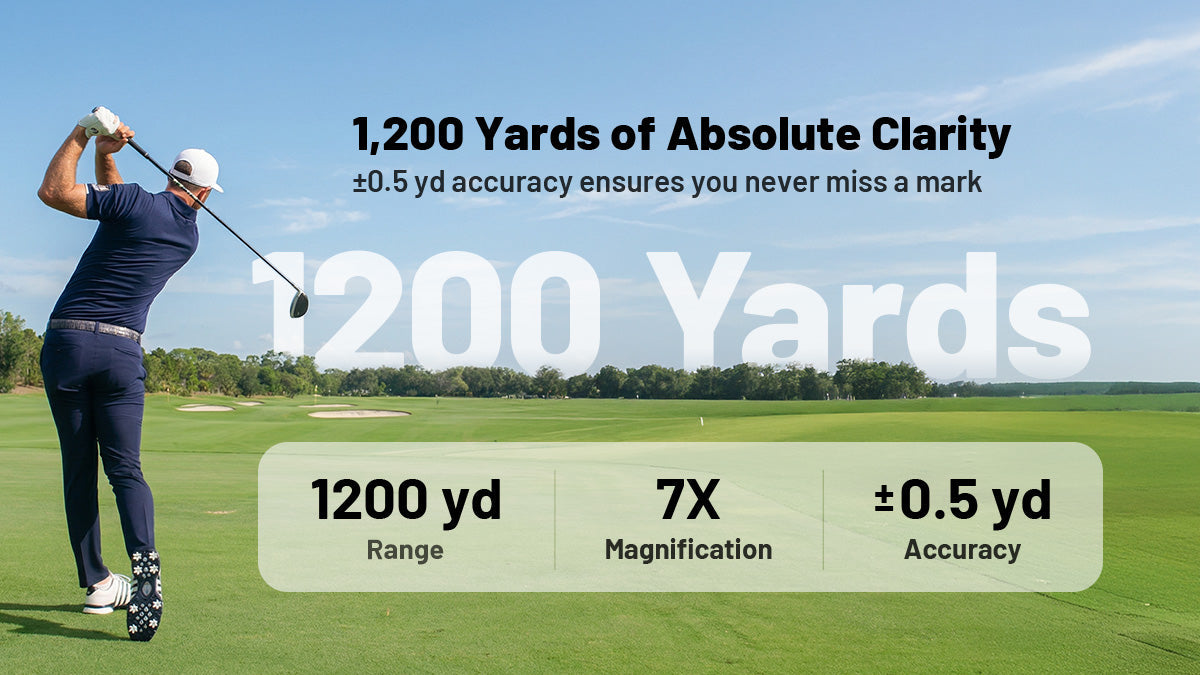
The most disruptive announcement of the year came from RAD Golf, which previewed the Lazer Pro at the PGA Show — billed as the first rangefinder with built-in cellular connectivity. The device combines elite laser performance (pin-locking precision, slope-adjusted distances, and range up to 1,200 yards) with an embedded cellular radio and onboard GPS.
Because the Lazer Pro carries its own data connection, it automatically recognizes courses and delivers front, center, and back yardages without pairing to a phone. Its always-on connection also enables over-the-air firmware updates, meaning the hardware improves after purchase. Post-round, the device sends a detailed shot-tracking report — every distance, every club — directly to the golfer's phone.
"Lazer Pro isn't just another rangefinder — it's the foundation of a connected platform that lets us keep improving the golfer experience long after the sale," said Peter Johnson, Chief Sales Officer at RAD Golf. Full commercial availability is targeted for later in 2026.
Connected Ecosystems at Every Price Point
Cellular connectivity is the headline, but it is not the only form of connected rangefinder technology gaining traction in 2026. Several brands are building tightly integrated device ecosystems — pairing laser rangefinders with launch monitors, GPS watches, and smart speakers — to deliver personalized club recommendations in the viewfinder itself.
Blue Tees debuted the Captain Pro, an IP67-rated laser with a 7x OLED display that pairs with the Blue Tees app and the brand's broader lineup of devices including a launch monitor and GPS speaker. The standout feature: personalized club suggestions based on actual launch monitor data, delivered directly into the rangefinder viewfinder. Industry observers note that this capability was previously limited to premium-tier products; Blue Tees is targeting the accessible mid-market.
Par Breaker introduced its Yard Sync lineup (models L10, L20, and L30, priced from $169.99 to $269.99), compact lasers that sync with its Swing Pulse X10 launch monitor to surface personalized yardage recommendations at the moment of club selection.
GPS-Laser Hybrids Go Mainstream
Alongside the connected ecosystem trend, GPS-integrated laser rangefinders are solidifying their place as a mainstream category. The Mileseey GenePro G1 — awarded best overall rangefinder of 2026 by MyGolfSpy with a 9.8/10 score — combines onboard GPS with full app integration and the traditional laser yardage features golfers expect.
The Bushnell Tour V7 Shift also drew significant attention at the PGA Show, offering "link-enabled technology" that syncs with a golfer's tracked club distances and personalizes yardage output. Its above-average optics and fast pin acquisition make it a strong choice across skill levels, according to industry reviews.
Competition among brands is accelerating feature development while simultaneously pushing prices downward — a dynamic reviewers described as the clearest sign yet that connected rangefinder technology is no longer a premium-only proposition.
What It Means for the Industry
The 2026 PGA Show consensus is clear: the rangefinder category is bifurcating. On one side are affordable, feature-rich lasers for golfers who want fast, accurate yardages. On the other is a rapidly expanding tier of connected devices that function as data platforms — tracking shots, recommending clubs, receiving software updates, and integrating with a broader on-course technology stack.
For golfers shopping in 2026, the key question is no longer simply "laser or GPS?" It is whether they want a standalone measuring tool or a device that grows with them. The technology to support either choice — at a range of price points — is now widely available.